Four steps from setup to long-term improvement.
Follow this workflow every practice session. By session five your grading shifts from how much you know to how much you've learned to defend.
Choose what you're tested on.
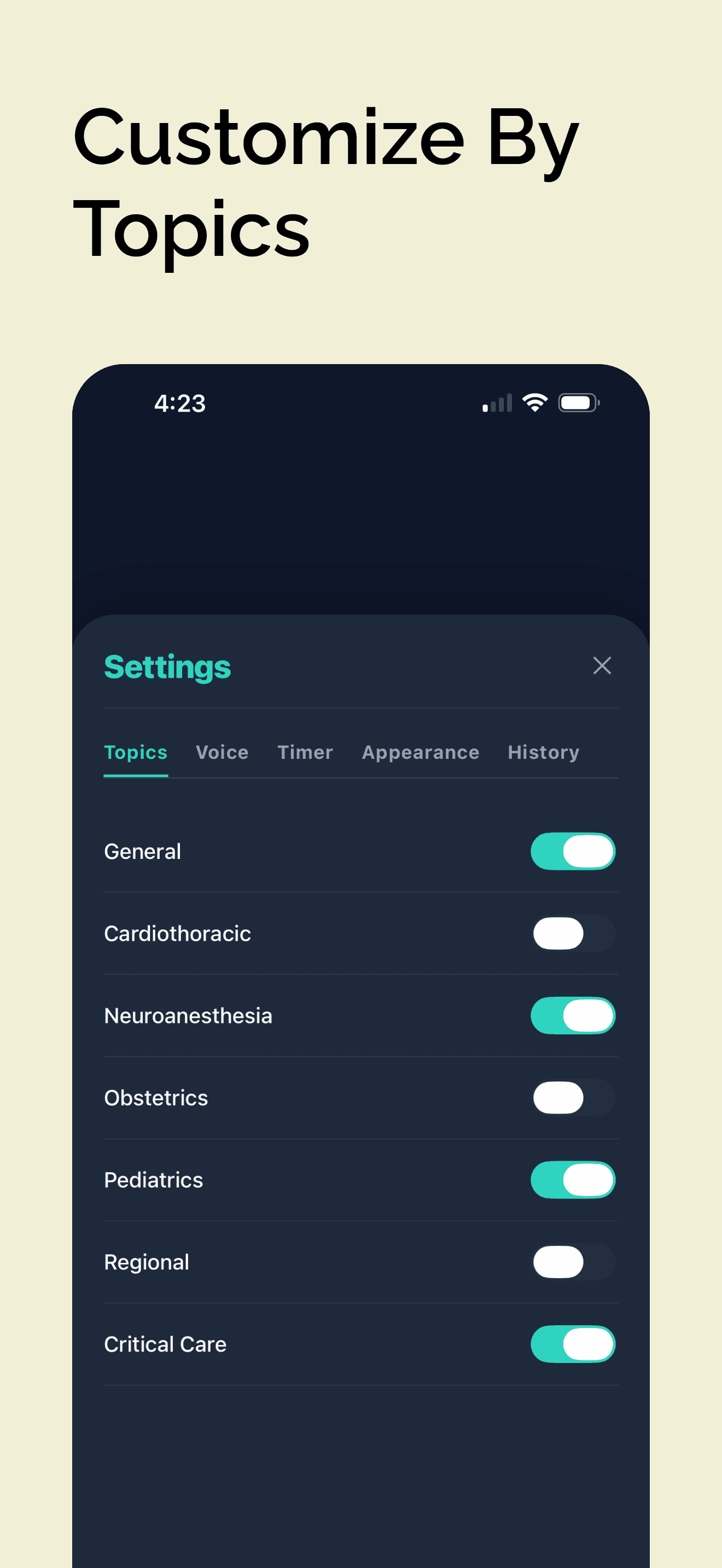
Open Settings and pick the clinical topics you want to practice — cardiac, neuro, obstetric, pediatric, vascular, trauma, or general. The examiner only pulls cases from your active topics. Start narrow; broaden as confidence grows.
Tip — Master one topic before adding another. Pattern recognition compounds.
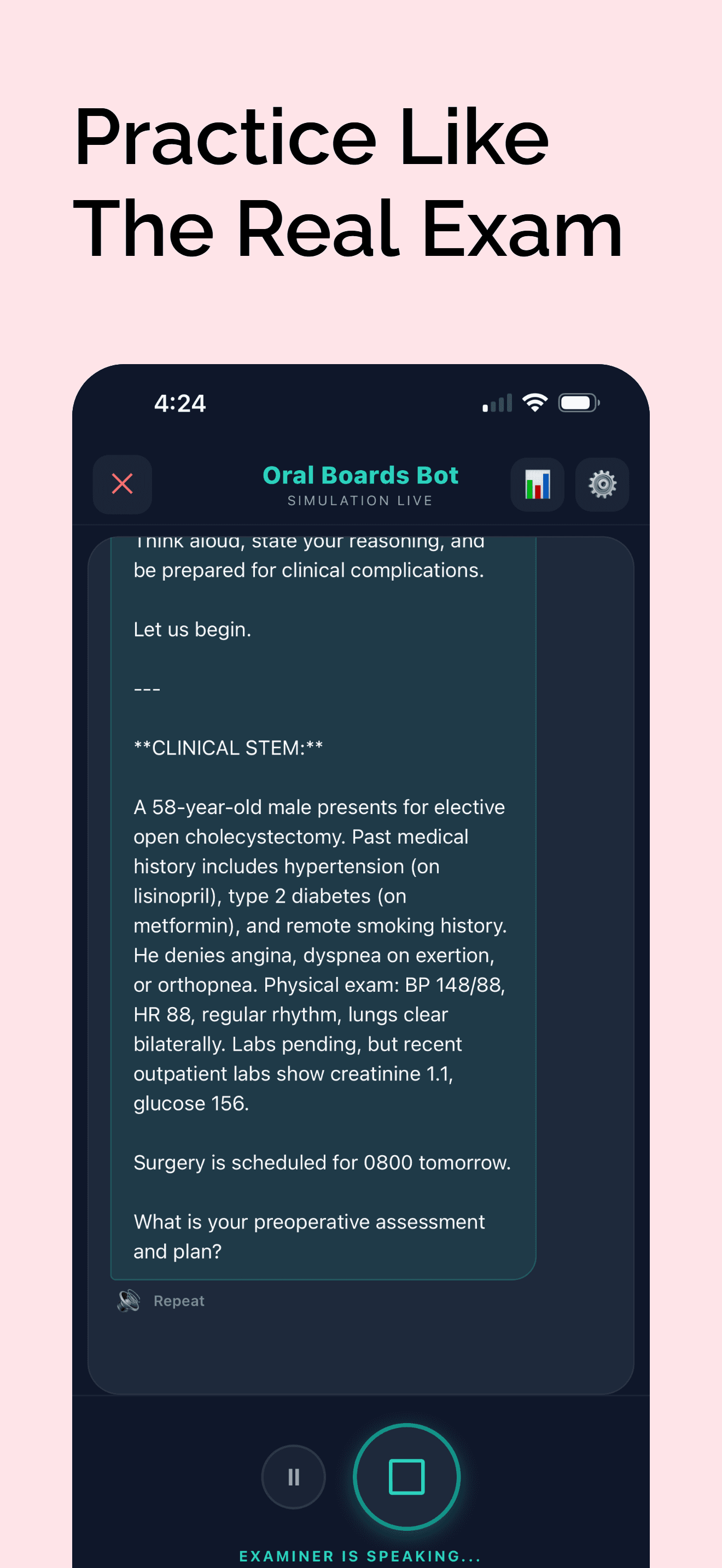
Practice like the real exam.
Hit Begin and the examiner presents a clinical stem — a real ABA-style case. Respond by voice or by typing. No coaching mid-session. The examiner probes, pivots, and escalates exactly like a board examiner would, hunting for gaps in your clinical reasoning.
Tip — Silence reads as hesitation. Keep moving even when imperfect.
Get scored on every session.
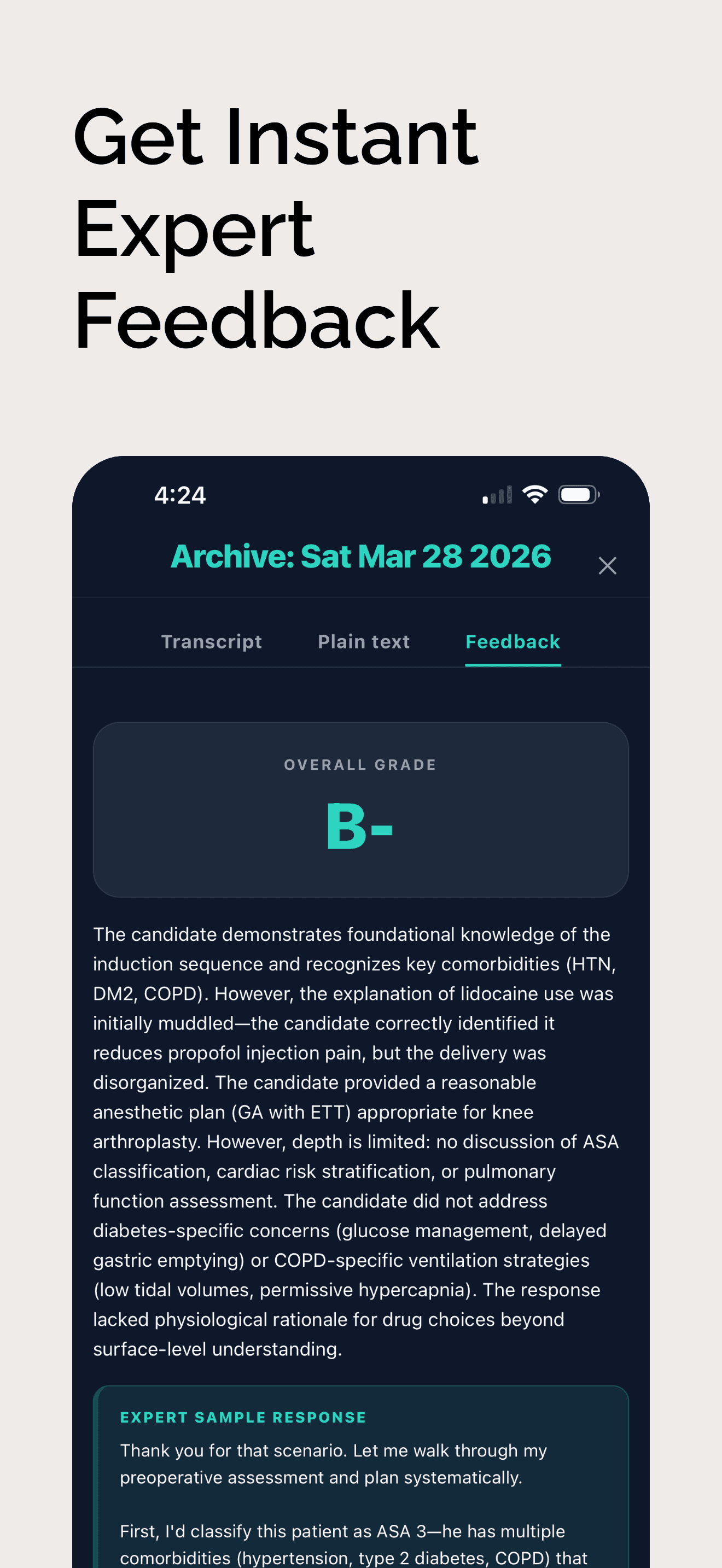
After 30 to 40 minutes you get a full grade card: overall grade, scores across the rubric's dimensions, strengths, recurring weak board domains, and an expert sample response for the toughest question you faced.
Tip — Confidence and defensibility matter as much as raw knowledge. The grader is watching how you reason, not just what you remember.
Build a feedback archive.
Every session is saved. Reopen any past transcript, re-read its grade card, and watch your grade trend month by month. The Progress tab surfaces recurring weak board domains — toggle 'Test on weaknesses' and the examiner will deliberately probe those gaps.
Tip — Review at least one past session before your next sit-down. Patterns become obvious fast.
The examiner doesn't teach.
Real ABA examiners don't give hints. They probe until you fail or pass. Boards Bot replicates that pressure so the actual exam feels familiar.
No in-session hints
The examiner never tells you if you're right or wrong during the case. Feedback comes only at the end — just like the real exam.
Adaptive probing
When you hesitate or give a vague answer, the examiner escalates. It hunts the boundary of your knowledge and pushes through it.
Multi-domain pivots
Sessions flow between domains naturally — airway to hemodynamics to pharmacology — simulating how real examiners move across a case.
Ready to start practicing?
Your first seven days are free. No credit card required.